
An indoor swing gives children the motion they love on rainy days, cold months and every day in between. But "indoor swing" covers very different products: a freestanding baby swing, a soft hammock seat and an enclosed sensory swing all do different jobs.
The short answer: for babies and young toddlers, choose a freestanding baby swing with a stand, or a hammock seat that sits upright or reclines. For older children who seek calming movement, or who love to spin and cocoon, choose a sensory swing. And if you already own a climber, pick a swing made to hang from it rather than a ceiling hook.
Types of indoor swings at a glance
| Type | Best for | Typical age | How it hangs |
|---|---|---|---|
| Baby swing with stand | First swings, supervised play | About 6 to 36 months | Its own freestanding frame, no mounting |
| Hammock swing seat | Swinging upright or reclining to calm down | About 6 to 36 months | From a swing stand or compatible climber |
| Sensory swing (cocoon) | Calming, enclosed movement and spinning | Toddlers to school age | From a compatible climber frame |
| Tear-drop sensory swing | Cocoon-style swinging on a wall gym | Toddlers to school age | From a compatible wall climber |
Baby swings with a stand
A freestanding baby swing has its own frame, so there is nothing to drill, hang or mount. That makes it the simplest indoor swing to set up and the easiest to move between rooms. The seat is designed to hold a baby securely once they can sit up with support.
The Avenlur Spruce is a foldable wooden baby and toddler swing with its own stand, designed for ages 6 to 36 months and up to 33 pounds. It sets up in about 10 minutes, folds flat for storage and is made for indoor use.
Hammock swings
A hammock swing is a soft fabric seat that hangs from a frame. Many adjust between an upright position for classic swinging and a reclined position for rocking and resting, which makes them useful for both active play and calm-down time.
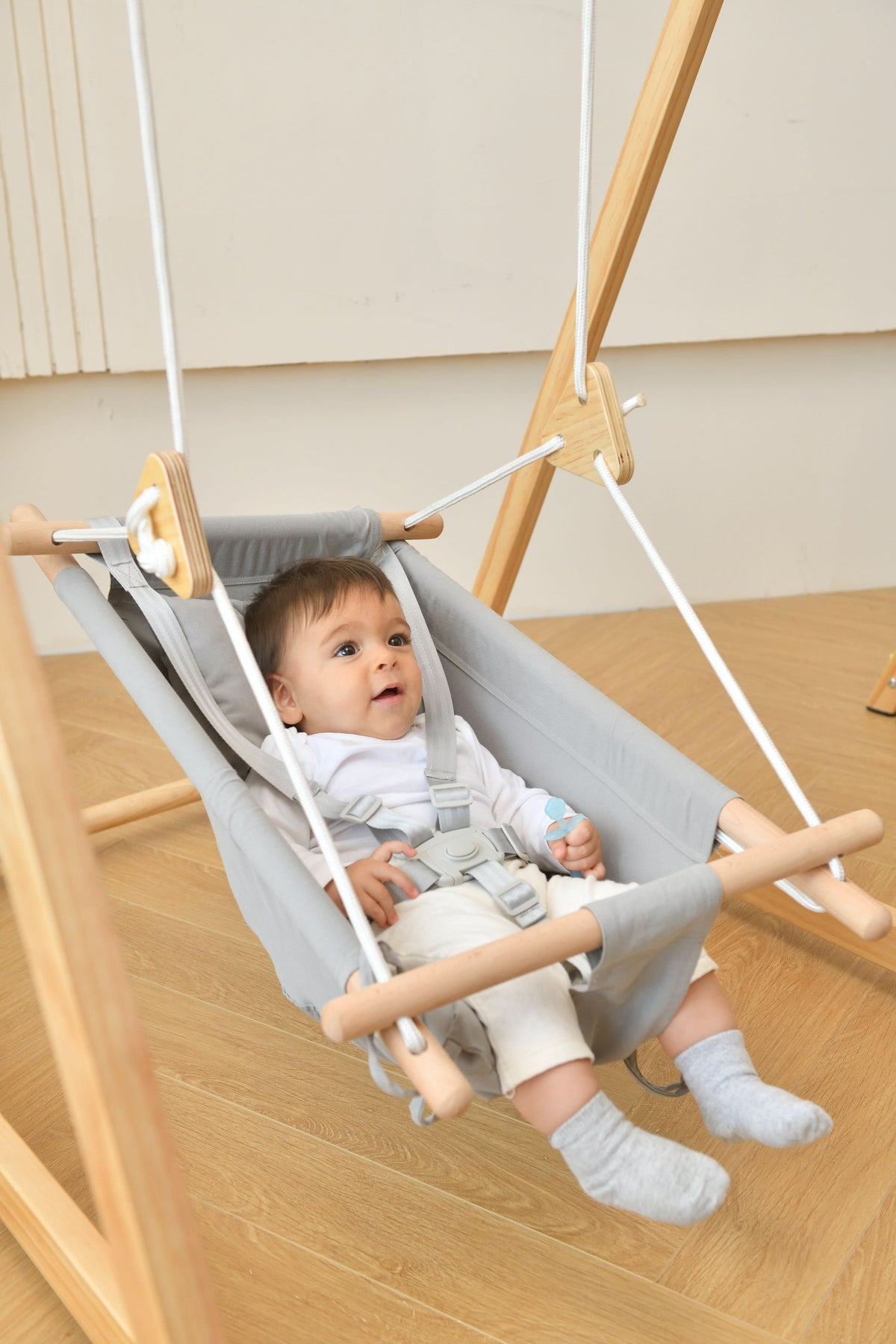
The Avenlur hammock swing fits the Spruce and Tulip swing frames and is sized for babies and toddlers from 6 to 36 months. Check the product page for compatible climbers.
Sensory swings
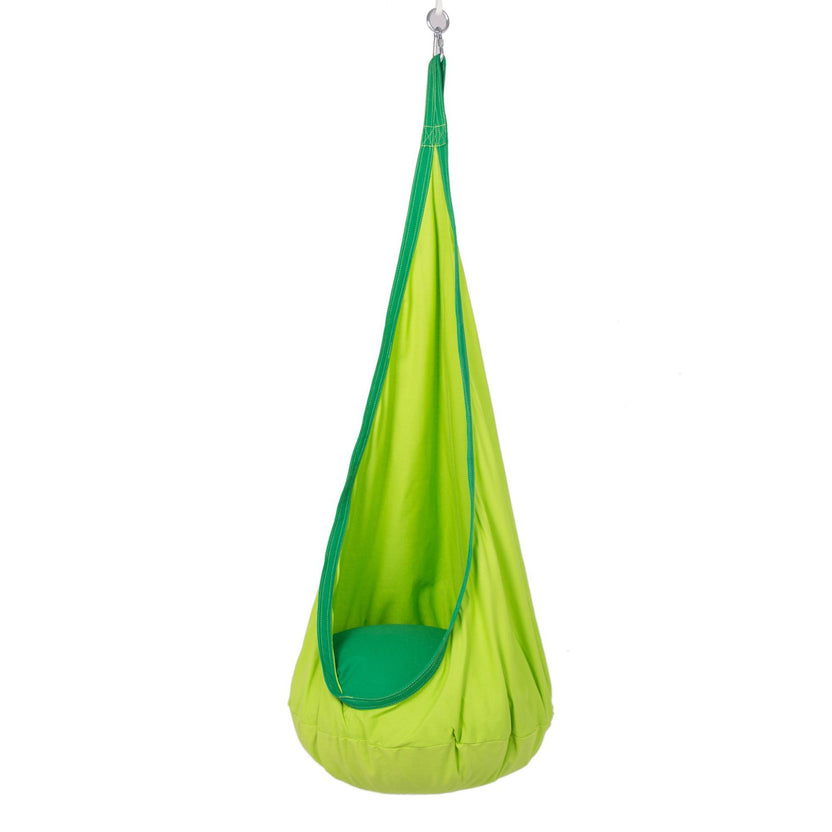
A sensory swing is an enclosed, cocoon-style swing that wraps around a child as they sway, spin or simply rest. The gentle pressure and enclosed shape feel calming to many children, which is why sensory swings are a fixture in occupational therapy rooms and sensory spaces.
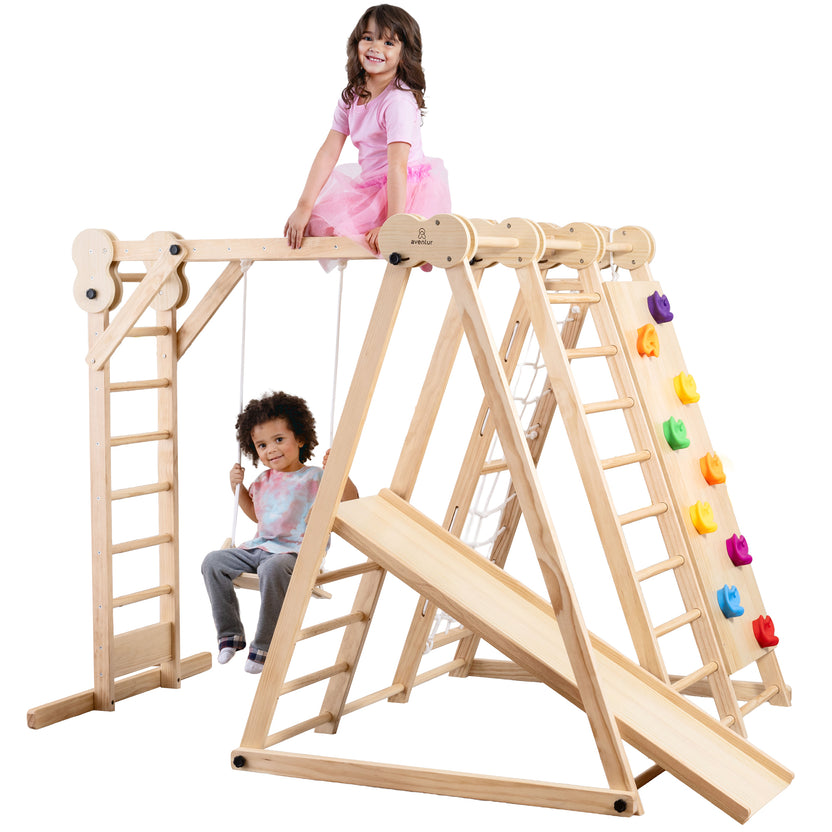
Avenlur makes two sensory swings, each designed for different frames:
- Sensory swing for large climbers: Fits the Large Magnolia, Large Chestnut, Alpine and Sweetgum (Large, X-Large and Jumbo). It does not fit the Medium Magnolia or Medium Grove.
- Tear-drop sensory swing: Fits the Grove, Walnut, Neem and Betula wall climbers.
Benefits of swinging for kids
Swinging is more than fun. The back-and-forth motion stimulates the vestibular system, the inner ear system that controls balance and spatial orientation. Pushing, pulling and holding on engage the proprioceptive sense, the body's awareness of where it is and how hard it is working.
- Balance and coordination: Regular swinging helps children develop balance and body control.
- Calming and regulation: Slow, rhythmic swinging helps many children settle, especially after busy play.
- Focus: Some children concentrate better after a few minutes of movement.
- Confidence: Learning to get in, hold on and swing independently is a real milestone for toddlers.
Sensory swings are popular with families of children who seek extra movement, including many children with sensory processing differences. If your child has specific sensory needs, an occupational therapist can suggest how and how long to use a swing.
Which indoor swing is right for your child?
By age
- 6 to 36 months: A baby swing with a stand or a hammock swing seat, always supervised.
- 3 years and up: A sensory swing on a compatible climber, for cocooning, spinning and calm-down time.
By setup
- No climber and no mounting: A freestanding baby swing like the Spruce.
- You own a large freestanding climber: The sensory swing for large climbers.
- You own a wall climber: The tear-drop sensory swing.
- You want to hang from the ceiling: Use hardware rated for dynamic loads, anchored into a joist, and consider a professional installer. Doorway bars are not designed for swinging.
Which Avenlur swing fits which frame?
| Swing | Fits | Age |
|---|---|---|
| Spruce baby swing | Freestanding, no frame needed | 6 to 36 months |
| Hammock swing | Spruce and Tulip, see product page for climbers | 6 to 36 months |
| Sensory swing for large climbers | Large Magnolia, Large Chestnut, Alpine, Sweetgum | Toddlers and up |
| Tear-drop sensory swing | Grove, Walnut, Neem, Betula | Toddlers and up |
Indoor swing safety
- Always supervise children on a swing.
- Follow the weight limit for both the swing and the frame it hangs from.
- Leave clear space in front of and behind the swing, away from furniture and walls.
- Place a soft mat or rug underneath on hard floors.
- Check straps, ropes and hardware regularly for wear.
- Indoor swings are for play, not sleep. If a baby falls asleep, move them to a crib or bassinet.
Frequently asked questions
What is a sensory swing?
A sensory swing is an enclosed, cocoon-style swing that wraps around a child as they sway or spin. The gentle pressure and enclosed shape help many children feel calm and focused.
What age can a baby use an indoor swing?
Most seated baby swings are designed from about 6 months, once a baby can sit up with support. Always check the swing's age range and weight limit.
What is the difference between a hammock swing and a sensory swing?
A hammock swing is a soft seat for babies and toddlers that swings upright or reclines. A sensory swing is a fully enclosed cocoon for older children who want calming, wrap-around movement.
Can I hang an indoor swing from the ceiling?
Only with hardware rated for dynamic loads, anchored into a ceiling joist. A freestanding swing or a swing made for your climber avoids ceiling installation entirely.
Are indoor swings good for toddlers?
Yes. Swinging builds balance, coordination and body awareness, and an indoor swing lets toddlers get that movement every day, whatever the weather.
Which Avenlur sensory swing fits my climber?
The sensory swing for large climbers fits the Large Magnolia, Large Chestnut, Alpine and Sweetgum. The tear-drop sensory swing fits the Grove, Walnut, Neem and Betula.
The bottom line
For a baby's first swing with no mounting, choose the Spruce. For a seat that swings or reclines, the hammock swing. And if your child loves to cocoon and spin, choose the sensory swing made for your climber. See all our playset accessories.