

Small rooms and energetic kids are a tricky combination. The furniture fills the floor, the toys fill what is left, and there is nowhere to actually move. But the floor is not the only space a room has. The walls go up eight feet or more, and that is where a small playroom finds room for real, active play.
The short answer: in a small room, climb the walls. A wall mounted Swedish ladder gives children a full climbing gym in as little as about two feet of depth. Pair it with foldable pieces that put away after play, furniture that does more than one job, and an open center for moving, and even a compact room can host everyday climbing.
Start With the Measurements
Before choosing anything, measure your floor, your wall space and your ceiling height. Climbing equipment needs both the space it sits on and clear room around it.
| Piece | Floor space when in use | When put away |
|---|---|---|
| Wall mounted Swedish ladder | About 2 feet of depth, plus about 2 feet of clear space in front | Stays on the wall, nearly flush |
| Swedish ladder with slide attached | About 5.5 feet of depth | Slide detaches and stores |
| Foldable wall mounted jungle gym | About 7.5 feet deep when open | Folds to 14 inches deep |
| Pikler triangle set | About 4 by 3 feet for the triangle alone | Folds flat |
| Freestanding indoor jungle gym | About 6 by 8 feet, plus 2 feet on open sides | Stays set up |
Check ceiling height too. A child standing on the top rung of a tall climber needs headroom, so measure from floor to ceiling before choosing a height.
1. Go Vertical With a Swedish Ladder
A Swedish ladder, sometimes called a Swedish wall or wall gym, is a tall wooden ladder frame that mounts to the wall. Children climb it, hang from it and use it as a base for attachments like slides, swings, rope ladders and climbing walls. Because it sits against the wall rather than in the middle of the room, it is the single most space-efficient way to add climbing to a small playroom.
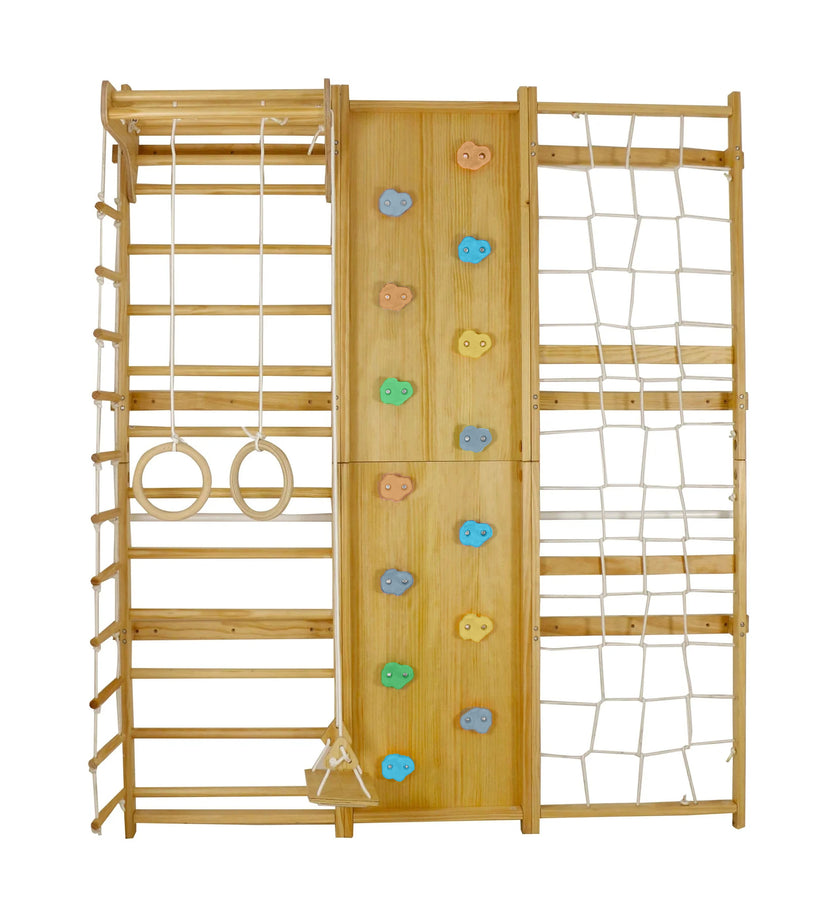
Our Walnut Swedish ladder combines nine ways to play on one wall: a Swedish ladder, rock wall, rope wall, rope ladder, rock ramp, slide, swing, trapeze swing and pull-up bar. It comes in two heights, 94.5 inches for ceilings of about 8 feet or more and 78.8 inches for lower ceilings and basements, and it is strong enough for parents to use for stretching too.
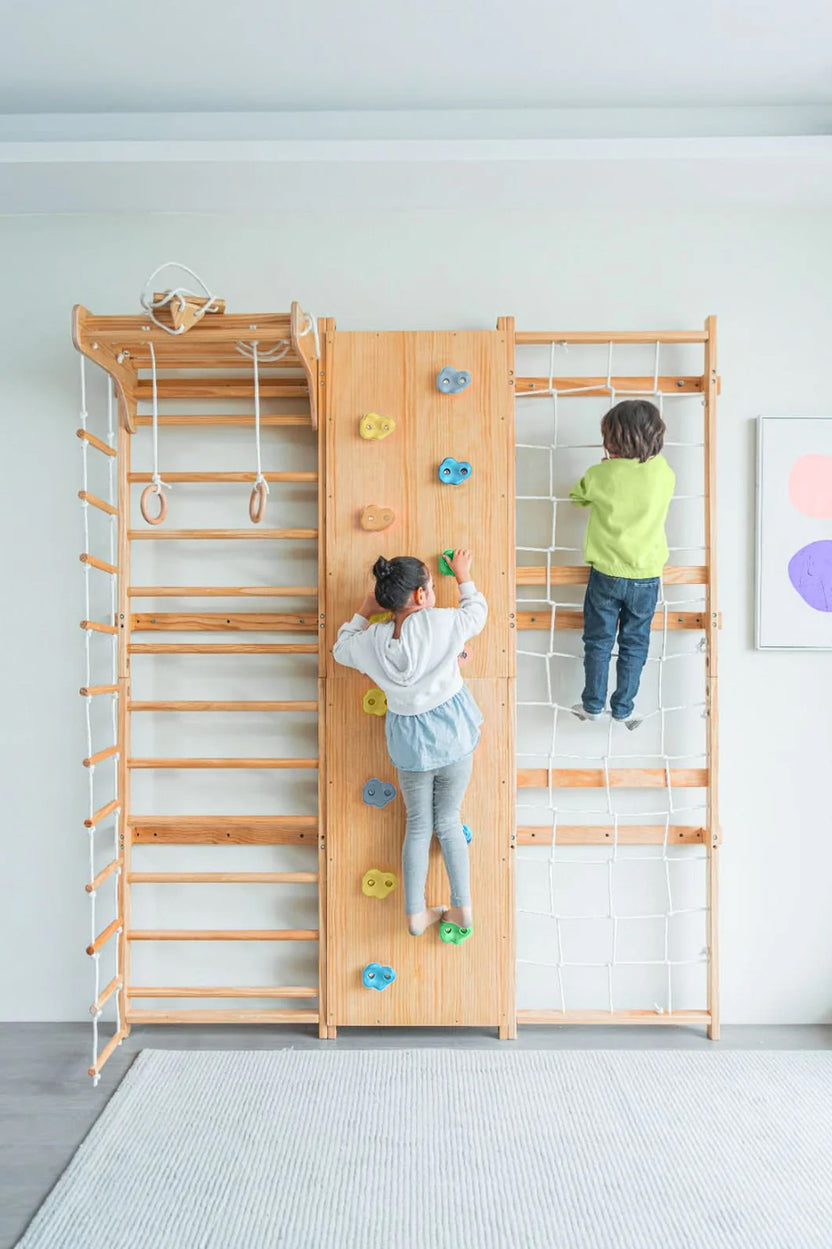
Walls with a window or door in the way? The Walnut Modular splits into three separate panels, a Swedish ladder, a rock wall and a rope wall, that can be installed side by side, on different walls or around a corner, so the climbing fits around the room instead of the other way round.

2. Choose Pieces That Fold Away
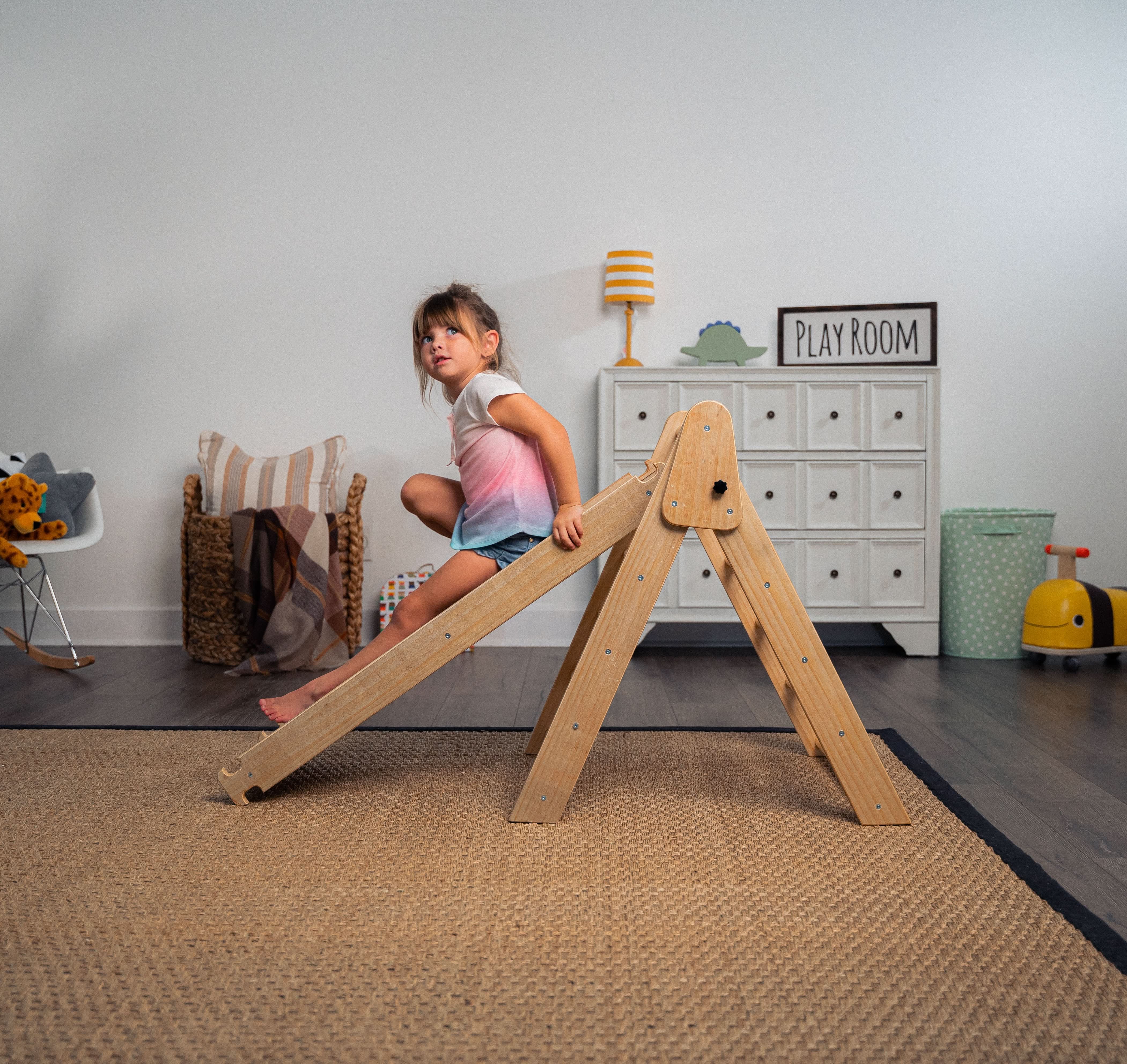
In a small room, the best equipment disappears when playtime is over. The Grove is a full 8-in-1 jungle gym with a slide, monkey bars, rings and a swing that mounts to the wall and folds up to just 14 inches deep. For younger children, the Hazel Pikler set folds flat to store behind a door or under a bed, and the Holland folding slide tucks away in seconds.

3. Divide the Room Into Three Zones
Even a small room works better with clear areas, so active play does not run into quiet play. Think in three zones:
- The climbing wall: your Swedish ladder or wall gym along one wall, with a mat in front of it.
- The making spot: a small table or desk for drawing, puzzles and crafts, placed away from the climbing area.
- The quiet corner: a few books, a cushion and soft light in the corner farthest from the climber.
Keep the middle of the room open. That open floor is where children land, roll, build and move between zones.
4. Pick Furniture That Does Two Jobs
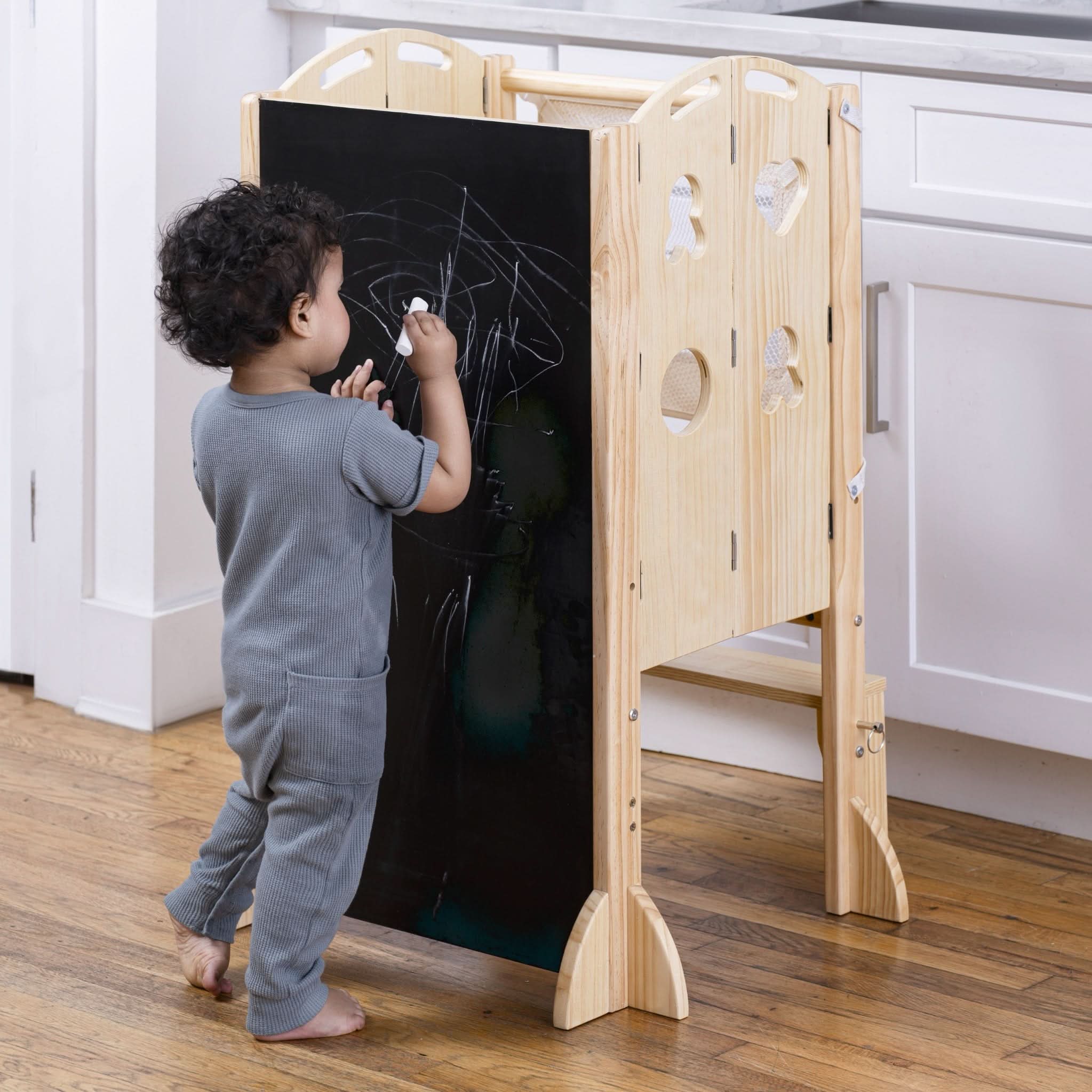
Every piece in a small playroom should earn its spot. The Date kitchen tower spends the morning as a step stool at the counter, then converts into a desk and chair with a built-in chalkboard for the playroom. A round activity table with built-in toys, like our multi-activity play table, gives a toddler a full play station on about two and a half feet of floor.
5. Store Up, Not Out
Keep toys off the floor so the open center stays open. Wall shelves, a narrow bookcase and a few lidded bins along the walls hold more than you would expect. Rotate toys every few weeks rather than keeping everything out at once, which keeps the room tidy and makes old toys feel new again.
6. Keep the Look Calm
A busy room feels smaller. Natural wood, soft colors and fewer, larger pieces make a compact playroom feel open and restful, and wooden climbing equipment fits in alongside the rest of your home rather than standing out against it.

Sample Layouts for Small Spaces
A 10 by 10 foot playroom
Mount a Swedish ladder on the longest uninterrupted wall with a mat in front. Put a small table on the opposite wall and a reading cushion in the corner. The center stays clear for play.
A shared bedroom
Use the wall opposite the bed for a Swedish ladder or foldable wall gym. Folded or with attachments removed, it reads as furniture by bedtime. Keep the climbing zone away from windows and the bed frame.
A corner of the living room
A foldable Pikler set or folding slide comes out for play and goes behind the sofa after. For older children, a Swedish ladder on a living room wall doubles as a stretching station for the whole family.
Safety in a Small Space
- Anchor wall equipment into studs following the manual. If your studs are not where you need them, consult the instructions or a professional installer.
- Leave a clear landing zone in front of climbers and at the bottom of slides, free of furniture.
- Keep climbers away from windows, shelves and anything a child could climb onto from the top.
- Use a padded mat on hard floors.
- Check headroom at the top rung, and choose a lower height for low ceilings.
- Supervise young climbers, and check bolts and attachments regularly.
Frequently Asked Questions
What is a Swedish ladder?
A Swedish ladder is a tall wooden ladder frame that mounts to the wall. Children climb and hang on it, and many add attachments like slides, swings, rope ladders and climbing walls. It originated as gymnastics equipment and is now popular for home playrooms because it takes so little floor space.
How much space does a Swedish ladder need?
A wall mounted Swedish ladder needs about 2 feet of depth against the wall, plus about 2 feet of clear space in front. With a slide attached, plan for about 5.5 feet. Measure your ceiling height to choose the right ladder height.
Is a Swedish ladder better than a jungle gym for a small room?
For small rooms, usually yes. A Swedish ladder uses wall space instead of floor space, while a freestanding jungle gym needs about 6 by 8 feet of floor plus clearance. A foldable wall mounted jungle gym is a good middle option.
What age is a Swedish ladder for?
Many families start around age 1 with supervision, using the lowest rungs, and children keep using them well into the school years as they add attachments like monkey bars and pull-up bars.
How do I make a small playroom feel bigger?
Keep the center of the floor open, store toys on walls rather than the floor, choose fewer and larger pieces, and use natural materials and soft colors.
Can I put climbing equipment in a bedroom?
Yes. Wall mounted and foldable climbers work well in bedrooms. Keep them away from windows and the bed, use a mat, and anchor wall equipment into studs.
The Takeaway
A small playroom does not have to mean less movement. Use the walls, choose pieces that fold, give every item more than one job and keep the center open. Explore our indoor climbers and wall gyms, or read our Swedish ladder guide for heights and attachments.